Lahore cricket alliances unite to demand impartial LRCA elections and policy reviews

Lahore cricket alliances unite to demand impartial LRCA elections and policy reviews
By Nawaz Gohar ; A powerful alliance of veteran cricket administrators, club presidents, and regional stakeholders has formally demanded immediate governance reforms and completely impartial elections within the Lahore Region Cricket Association (LRCA).
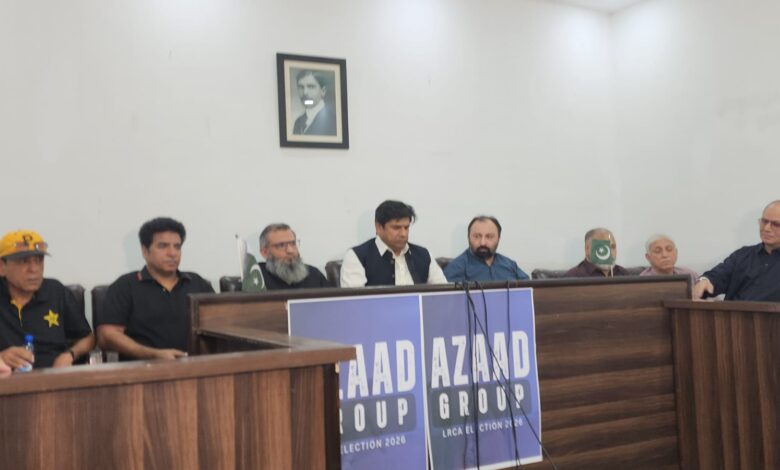
The newly formed coalition, emerging under the seasoned leadership of Cantt Zone cricket leader Malik Muhammad Aslam Dogar, was officially unveiled during a heavily attended press conference and strategic gathering.
The high-profile assembly drew a significant cross-section of Lahore’s grassroots cricket organizers, including notable figures such as Bilal Muqeet, Wasif Zaman, former Lahore Region President Shahrez Abdullah Khan Rokhri, Ahmed Ayaz Khan, Shoaib Dar, and Malik Sarwar Mahmood.
Addressing the media briefing, senior cricket organizer Wasif Zaman delivered a stern reminder of Lahore’s historic role as an elite pipeline for national cricketing talent. He emphasized that the structural and competitive health of cricket in metropolitan powerhouses like Lahore and Karachi dictates the international trajectory of Pakistan cricket.
Zaman voiced deep disappointment over the visible decline in the performance and standards of Lahore Region teams. He revealed that formal complaints addressing severe administrative mismanagement had already been submitted directly to the Pakistan Cricket Board (PCB).
Going a step further, Zaman alleged that specific individuals within the current cricket administration are actively compromising neutrality by weaponizing institutional backing for a favored group. He called for an immediate, independent inquiry into these administrative actions to preserve the integrity of the regional game.
The coalition strongly echoed these administrative reservations while evaluating the region’s current policies. Former LRCA President Shahrez Rokhri commended PCB Chairman Mohsin Naqvi for his nationwide vision to elevate Pakistan cricket but warned that his hard work at the top tier could be undone locally if the upcoming LRCA elections are not conducted with absolute transparency.
A major point of contention highlighted by Lahore East Zone Cricket Association President Bilal Muqeet was the controversial carving up and restructuring of existing cricket zones. Muqeet pointed out that the East Zone—traditionally the busiest hub for club tournaments—had been aggressively split.
He urged Chairman Naqvi and the PCB to urgently review the new boundaries, arguing that Lahore’s booming youth population requires expanded opportunities and more teams, rather than administrative reduction.
Adding to the friction, Ahmed Ayaz Khan questioned the logical basis for introducing entirely new zones after the rigorous process of club scrutiny had already been completed under a different setup. Multiple speakers also raised alarms regarding intense backroom pressure and intimidation tactics being exerted on vulnerable club stakeholders during the current electoral cycle.
Concluding the session, cricket organizer Shoaib Dar issued a blunt warning, stating that any systematic weakening of Lahore’s vibrant club infrastructure would yield disastrous, long-term consequences for the national team’s talent identification process.
The alliance concluded with a unified pledge to protect the local game, urging the PCB to guarantee a level playing field so that merit, rather than political maneuvering, dictates the future of Lahore cricket.
By Nawaz Gohar
A powerful alliance of veteran cricket administrators, club presidents, and regional stakeholders has formally demanded immediate governance reforms and completely impartial elections within the Lahore Region Cricket Association (LRCA).
The newly formed coalition, emerging under the seasoned leadership of Cantt Zone cricket leader Malik Muhammad Aslam Dogar, was officially unveiled during a heavily attended press conference and strategic gathering.
The high-profile assembly drew a significant cross-section of Lahore’s grassroots cricket organizers, including notable figures such as Bilal Muqeet, Wasif Zaman, former Lahore Region President Shahrez Abdullah Khan Rokhri, Ahmed Ayaz Khan, Shoaib Dar, and Malik Sarwar Mahmood.
Addressing the media briefing, senior cricket organizer Wasif Zaman delivered a stern reminder of Lahore’s historic role as an elite pipeline for national cricketing talent. He emphasized that the structural and competitive health of cricket in metropolitan powerhouses like Lahore and Karachi dictates the international trajectory of Pakistan cricket.
Zaman voiced deep disappointment over the visible decline in the performance and standards of Lahore Region teams. He revealed that formal complaints addressing severe administrative mismanagement had already been submitted directly to the Pakistan Cricket Board (PCB).
Going a step further, Zaman alleged that specific individuals within the current cricket administration are actively compromising neutrality by weaponizing institutional backing for a favored group. He called for an immediate, independent inquiry into these administrative actions to preserve the integrity of the regional game.
The coalition strongly echoed these administrative reservations while evaluating the region’s current policies. Former LRCA President Shahrez Rokhri commended PCB Chairman Mohsin Naqvi for his nationwide vision to elevate Pakistan cricket but warned that his hard work at the top tier could be undone locally if the upcoming LRCA elections are not conducted with absolute transparency.
A major point of contention highlighted by Lahore East Zone Cricket Association President Bilal Muqeet was the controversial carving up and restructuring of existing cricket zones. Muqeet pointed out that the East Zone—traditionally the busiest hub for club tournaments—had been aggressively split.
He urged Chairman Naqvi and the PCB to urgently review the new boundaries, arguing that Lahore’s booming youth population requires expanded opportunities and more teams, rather than administrative reduction.
Adding to the friction, Ahmed Ayaz Khan questioned the logical basis for introducing entirely new zones after the rigorous process of club scrutiny had already been completed under a different setup. Multiple speakers also raised alarms regarding intense backroom pressure and intimidation tactics being exerted on vulnerable club stakeholders during the current electoral cycle.
Concluding the session, cricket organizer Shoaib Dar issued a blunt warning, stating that any systematic weakening of Lahore’s vibrant club infrastructure would yield disastrous, long-term consequences for the national team’s talent identification process.
The alliance concluded with a unified pledge to protect the local game, urging the PCB to guarantee a level playing field so that merit, rather than political maneuvering, dictates the future of Lahore cricket.